Haute Autorité de Santé Unveils Landmark Framework to Integrate Non-Technical Skills for Enhanced Healthcare Quality and Safety

Paris, France – The Haute Autorité de Santé (HAS) has officially launched a groundbreaking new framework designed to systematically integrate and develop non-technical skills (NTS) across the French healthcare system. This pivotal initiative, formally published in April 2026, marks a significant evolution in the national approach to patient safety and the professional development of healthcare workers, emphasizing that the efficacy and safety of care extend far beyond mere technical proficiency. The framework posits that the manner in which professionals communicate, collaborate, make decisions, and adapt to complex situations—collectively termed non-technical skills—is just as crucial as their clinical expertise.
The Paradigm Shift: Beyond Technical Prowess
For decades, the bedrock of medical training and evaluation has predominantly focused on technical skills—the diagnostic acumen, surgical precision, and procedural mastery that define clinical competence. However, a growing body of evidence, bolstered by insights from high-reliability organizations like aviation and nuclear power, has underscored the critical role of human factors in preventing adverse events and optimizing performance. The HAS framework represents a formal recognition of this paradigm shift within the French healthcare landscape, acknowledging that organizational and human factors are indispensable components of quality and safety. It asserts that the performance of the healthcare system can no longer be singularly viewed through the lens of individual technical skills; rather, a holistic understanding of competence, encompassing both technical execution and the "how" of its delivery, is essential. This dissociation of technical and non-technical skills is primarily pedagogical, aimed at facilitating learning, but in practice, true competence is an integrated whole.
Defining the Invisible Pillars: What are Non-Technical Skills?
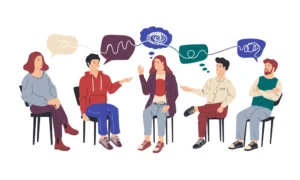
Non-technical skills are defined by Flin et al. (2008) as "cognitive, social, and personal resources that complement technical skills and contribute to safety and task performance." These are not merely soft skills but a distinct set of cognitive and social aptitudes that directly influence the effectiveness and safety of healthcare professionals. In a dynamic environment characterized by inherent uncertainty, urgency, complex patient pathways, and pervasive collaboration, NTS are critical. They are instrumental in preventing and recovering from adverse events associated with care (EIAS), fostering seamless coordination among multidisciplinary teams, and optimizing both individual and collective performance. The integration of NTS is particularly vital in environments where rapid decision-making under pressure is commonplace and where the consequences of error can be severe.
The HAS framework provides a structured classification of NTS, drawing heavily on the foundational work of Flin et al. (2008), which categorizes them into three principal axes: cognitive, interpersonal (or social), and personal skills.
A Comprehensive Classification: The Three Core Categories of NTS
-
Cognitive Skills: Navigating Complexity
These skills relate to mental processes involved in understanding and responding to situations.- Decision-Making: This is the capacity to analyze available options, weigh potential outcomes, and act appropriately, especially under pressure or in ambiguous situations. In a critical care setting, for instance, a clinician’s ability to quickly assimilate patient data, consider differential diagnoses, and choose the most effective treatment pathway under time constraints is a prime example of decision-making NTS. Flawed decision-making, often influenced by cognitive biases or insufficient information processing, is a known contributor to medical errors.
- Situation Awareness: This aptitude involves accurately perceiving clinical and environmental elements, comprehending their significance, and anticipating future developments. For a surgical team, this might mean not only knowing the patient’s current vital signs but also understanding the surgical field’s evolving conditions, recognizing potential complications, and anticipating the next steps in the procedure. A breakdown in situation awareness can lead to missed cues, delayed interventions, and adverse outcomes.
- Workload Management: This refers to the ability to prioritize tasks, plan effectively, and adapt swiftly to unforeseen circumstances. In a busy emergency department, managing multiple patients with varying acuities, delegating tasks, and adjusting plans as new information or emergencies arise are crucial aspects of workload management. Inefficient workload management can lead to task saturation, increased stress, and a higher propensity for errors.
-
Interpersonal Skills: The Fabric of Teamwork
These skills facilitate effective interaction and collaboration among individuals and teams.- Effective Communication: The ability to understand and be understood without ambiguity is paramount. This includes active listening, clear verbal and non-verbal communication, and closed-loop communication strategies (e.g., "I heard you say X, I will do Y") to ensure messages are received and acted upon correctly. In a handover between shifts, for example, clear, concise, and comprehensive communication of patient status, ongoing treatments, and potential risks is vital for continuity of care and patient safety. Studies consistently link communication failures to a significant percentage of adverse events in healthcare.
- Teamwork: This encompasses the capacity to work effectively within a team, involving coordination, cooperation, mutual aid, and trust. A well-functioning surgical team, for instance, demonstrates seamless teamwork where each member understands their role, supports others, and collaborates towards a common goal, anticipating each other’s needs. Conversely, a lack of teamwork can lead to fragmented care, duplicated efforts, and increased risk.
- Leadership: Defined as the capacity for guidance, accountability, and conflict management, leadership within a healthcare team can be both formal and informal. A charge nurse demonstrating effective leadership might facilitate team discussions, delegate tasks fairly, empower team members, and de-escalate interpersonal conflicts, thereby maintaining a productive and cohesive environment. Strong leadership fosters a culture where safety concerns can be raised openly.
-
Personal Skills: Resilience Under Pressure
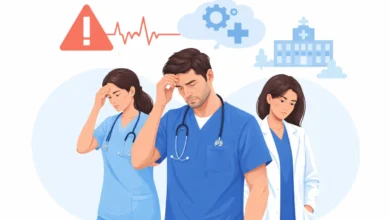
These skills relate to an individual’s self-management and emotional regulation.- Stress Management: The ability to maintain control and effectiveness under pressure is critical in high-stakes healthcare environments. This includes recognizing personal stress triggers, employing coping mechanisms, and maintaining composure during emergencies. For an intensivist managing a critically ill patient, effective stress management allows them to remain focused and make rational decisions despite the high emotional and cognitive demands. Chronic, unmanaged stress can lead to burnout and impaired performance.
- Fatigue Management: This involves recognizing signs of fatigue and implementing individual or organizational strategies to mitigate its effects. Healthcare professionals often work long and irregular hours, making fatigue a significant risk factor for errors. Strategies might include advocating for appropriate rest breaks, utilizing napping policies, or recognizing when one is too fatigued to perform safely and seeking support.
It is crucial to understand that these skills are not isolated; they are profoundly interdependent. A single complex clinical situation will simultaneously mobilize multiple NTS. For instance, managing an unexpected complication during surgery requires situation awareness to identify the problem, effective communication to inform the team, decision-making to choose the appropriate intervention, teamwork to execute it, leadership to coordinate efforts, and stress management to maintain composure. The individualization of each NTS within the framework serves a purely pedagogical purpose, simplifying its comprehension during the learning process.
Why Now? The Urgent Need for NTS Integration
The imperative to integrate NTS into healthcare training and practice is underscored by several converging factors. The increasing complexity of medical interventions, the rise of chronic diseases requiring multi-disciplinary care, and the growing evidence of patient harm linked to human factors have made this initiative not just desirable, but essential. Studies consistently show that communication breakdowns, inadequate teamwork, and poor decision-making are root causes in a significant percentage of adverse events. For example, a 2018 review published in the BMJ Quality & Safety journal estimated that communication failures contributed to approximately 70% of sentinel events in healthcare. The economic burden of preventable medical errors is also substantial, with estimates suggesting billions of euros lost annually due to extended hospital stays, additional treatments, and litigation.
Furthermore, the well-being and sustainability of the healthcare workforce are at stake. High rates of burnout, stress, and fatigue among healthcare professionals are global concerns. By equipping professionals with skills in stress and fatigue management, and by fostering environments of effective communication and teamwork, the HAS framework aims to enhance not only patient safety but also the resilience and job satisfaction of healthcare providers. This holistic approach recognizes that a healthy and well-supported workforce is intrinsically linked to the provision of high-quality, safe patient care.
A Global Imperative: International Context and Best Practices
The emphasis on non-technical skills is not unique to France. Inspired by the aviation industry’s pioneering work in Crew Resource Management (CRM) in the 1970s, which significantly reduced airline accidents by focusing on communication, leadership, and decision-making, other high-risk sectors have progressively adopted similar training models. Healthcare began its journey toward NTS integration decades ago, with landmark initiatives such as the Scottish Patient Safety Programme and the widespread adoption of surgical safety checklists by the World Health Organization (WHO) incorporating NTS principles. Countries like the United Kingdom, the United States, Australia, and Canada have developed their own NTS training programs and frameworks, particularly in fields like surgery (e.g., NOTSS – Non-Technical Skills for Surgeons) and emergency medicine. The HAS framework aligns France with these international best practices, demonstrating a commitment to global standards in patient safety and professional development.
The HAS Framework: A Blueprint for Change
The new HAS framework is not merely a theoretical document; it is a practical and actionable blueprint. It provides a common, structured, and shared framework intended to cultivate a pervasive culture of safety and cooperation at all levels of the healthcare system. It enriches existing professional competency frameworks by offering a unified language and pedagogical benchmarks that can be mobilized effectively in both initial professional training (e.g., medical schools, nursing colleges) and continuous professional development.
Specifically, the referential makes available:
- A foundation of key concepts related to human and organizational factors in healthcare, providing a shared understanding for all stakeholders.
- Thirteen practical sheets designed to guide the development of specific human factors competencies, offering concrete strategies and tools.
- Active pedagogical methods such as simulation-based training, debriefing sessions after critical events, and structured experience feedback, all proven to be highly effective in NTS acquisition and refinement. These methods move beyond traditional didactic teaching to experiential learning, allowing professionals to practice and reflect on their NTS in a safe, controlled environment.
A Collaborative Journey: Implementation and Stakeholder Engagement
The successful implementation of this ambitious framework hinges on a strong conviction: non-technical skills are not innate but are acquired, developed, and maintained throughout a professional’s entire career. This lifelong learning process is fostered through exposure to real-life situations, active and reflexive pedagogical methods, and within committed professional collectives. Such an undertaking necessitates a concerted and joint commitment from a broad spectrum of stakeholders, including:
- Training actors: Medical and nursing schools, vocational training institutions, and continuing education providers must integrate NTS into their curricula.
- Healthcare establishments: Hospitals, clinics, and other care facilities must champion NTS development through their organizational culture, policies, and in-house training programs.
- Managers and leaders: Those in leadership positions must model NTS, create supportive environments for their development, and actively address NTS-related issues.
- National and territorial institutions: Regulatory bodies and regional health agencies must provide oversight, resources, and policy support for the framework’s adoption.
- Patients and users: Their perspectives are invaluable in understanding the impact of NTS on care quality and safety, and their engagement can help shape training content and evaluation.
Voices from the Field: Anticipated Reactions
The publication of this framework has been met with widespread positive anticipation across the French healthcare community. Dr. Geneviève Lefebvre, Director of Quality and Safety at HAS, remarked, "This framework is a testament to our unwavering commitment to patient safety. It’s about recognizing that excellent care isn’t just about what you do, but how you do it. By investing in non-technical skills, we are building a more resilient, adaptive, and ultimately safer system for everyone."
Representatives from national medical and nursing associations have echoed this sentiment. "For too long, these vital skills were implicitly understood but rarely explicitly taught," commented Professor Antoine Dubois, President of the National Council of Physicians. "The HAS framework provides the structure we desperately needed to integrate these competencies systematically into all stages of professional development." Educators foresee a transformative impact on curricula. "This will fundamentally change how we train future healthcare professionals," stated Dr. Sophie Bertrand, Dean of a prominent university hospital. "Simulation, debriefing, and interprofessional education will become even more central, preparing our students for the real-world complexities of team-based care." Patient advocacy groups have also welcomed the initiative, viewing it as a critical step towards more humane and reliable care.
Transformative Impact: Towards a Safer, More Sustainable Healthcare System
The HAS framework for non-technical skills opens the door to a profoundly transformed French healthcare system—one that is safer, more learning-oriented, more cooperative, and ultimately more sustainable. By explicitly valuing and fostering skills like effective communication, teamwork, leadership, situation awareness, and stress management, the framework promises to enhance the reliability of care pathways and significantly contribute to the prevention of adverse events. Moreover, it strengthens the capacity of teams to recover effectively from high-risk situations, minimizing potential harm.
Beyond direct patient outcomes, the focus on NTS is expected to have a profound positive impact on the well-being and sustainability of the healthcare workforce. By equipping professionals with tools to manage stress and fatigue, and by promoting environments of mutual support and effective teamwork, the framework aims to mitigate the pervasive issues of burnout and professional attrition. This, in turn, contributes to a more stable, engaged, and resilient healthcare workforce, capable of providing high-quality care over the long term.
This initiative signifies a maturation of healthcare safety culture in France, moving beyond a reactive, blame-focused approach to a proactive, systemic, and human-centered strategy. It establishes a robust foundation for continuous improvement, fostering an environment where learning from experience is institutionalized and where all professionals are empowered to contribute to a culture of safety. The HAS non-technical skills framework is a visionary step, setting a new standard for excellence in healthcare that benefits both the dedicated professionals and the patients they serve.
Related posts: