The Hardy Japanese Banana Plant: A Surprisingly Resilient Tropical Enigma for European Gardens

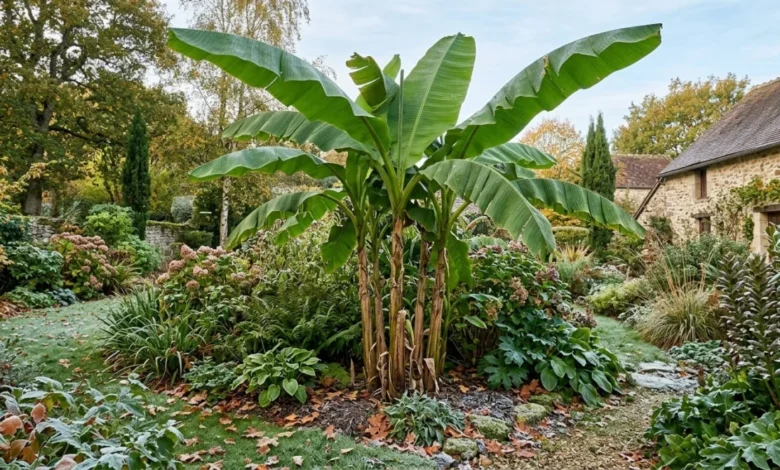
A wave of surprise is rippling through gardening communities across Europe, particularly in France, as a remarkable plant from Asia challenges conventional horticultural wisdom. The Musa basjoo, commonly known as the Japanese banana plant, is proving its mettle as a surprisingly cold-hardy specimen, capable of withstanding winter conditions without the extensive protection typically demanded by tropical flora. Gardeners are reporting astonishing resilience, with plants emerging robustly in spring despite leaves that are thoroughly blackened and seemingly destroyed by frost. This seemingly impossible survival is transforming ordinary lawns into miniature jungle paradises, offering a touch of the exotic to temperate climates.
Musa Basjoo: The Frost-Defying Banana from Asia
Contrary to the delicate image often associated with banana plants, Musa basjoo is a remarkably robust species. Originating from the mountainous regions of Japan, it possesses an innate ability to endure significant frost. While its true fruits are a minor footnote in European cultivation – typically small, seedy, and rarely developing fully – it is precisely this hardiness and its dramatic, tropical-looking foliage that captivate gardeners. The plant is cultivated almost exclusively for its impressive leaf display and its ability to create a visually striking, almost jungle-like ambiance.
The winter transformation of Musa basjoo can be alarming to the uninitiated. Its large, broad leaves soften, turn brown, and eventually disintegrate. The pseudo-stem, which is essentially a tightly packed cylinder of leaf sheaths filled with water, can also freeze. However, the plant’s true resilience lies beneath the surface. A stout, subterranean rhizome remains alive and well-protected in the soil, serving as the plant’s vital core. While a typical tropical banana might begin to suffer damage at temperatures around 0°C (32°F), the Japanese banana, thanks to this underground survival mechanism, continues to thrive. It can reportedly withstand temperatures as low as -10°C to -12°C (14°F to 10°F), with even lower temperatures being tolerated if the base of the plant is adequately insulated with mulch or a protective winter fleece. This natural adaptation makes it a unique proposition for gardeners seeking to introduce a tropical aesthetic without the prohibitive labor of winter protection.
The Secret to Explosive Growth: A Powerful Rhizome, Ample Sun, and Rich Soil
As warmer temperatures return, the Musa basjoo’s rhizome awakens from its dormancy. New shoots emerge from the soil or from the center of the previous year’s dying stem, ascending with astonishing speed. In ideal conditions, particularly when planted directly in the ground, Musa basjoo can achieve a growth of two to three meters (6.5 to 10 feet) within a single growing season. Its leaves expand to impressive dimensions, quickly establishing the sought-after "jungle effect" in even the most temperate of garden settings.
Achieving this spectacular growth hinges on several key environmental factors. Planting directly into the ground, or "pleine terre," is paramount for both cold hardiness and maximizing the plant’s potential stature. The ideal location offers full sun or very bright light, but it is crucial to shield the plant from strong winds, which can easily tear its large, delicate-looking leaves. The soil itself must be rich, deeply worked, and amended generously with compost or high-quality planting soil. Crucially, excellent drainage is essential to prevent the rhizome from succumbing to rot in waterlogged winter conditions.
A Simple Care Plan: Minimal Winter Protection, Abundant Summer Hydration
Once established, this botanical giant exhibits a significant appetite and thirst. Throughout the warmer months, it requires regular and generous watering to maintain consistently moist, but not waterlogged, soil. A feeding regime beginning with an application of organic fertilizer for green plants in early spring, followed by supplemental feedings during the summer, will provide the necessary nutrients for the rhizome to store energy and continuously produce new, enormous leaves.
As the first serious frosts approach, the recommended winter care is often minimal. Home gardeners typically resort to cutting back the blackened leaves and, if a particularly harsh winter is predicted, the pseudo-stem itself. This is usually followed by covering the base of the plant with a thick layer of dead leaves, straw, or other vegetative mulch. In milder regions, some gardeners opt to leave the plant completely unprotected, relying on its inherent resilience. Come spring, the rhizome will vigorously sprout new growth, often accompanied by numerous offshoots. These can be carefully separated and replanted elsewhere, allowing gardeners to gradually cultivate an authentic mini-tropical forest without the arduous task of overwintering delicate species.
The Global Context: Musa Basjoo’s Journey and Horticultural Significance
The widespread adoption of Musa basjoo in European gardens represents a fascinating intersection of plant migration, horticultural innovation, and a growing public desire for exotic landscapes. While its origins are rooted in the temperate mountain ranges of Japan, where it has likely been cultivated for centuries for its fiber and occasional edible uses, its journey to Western gardens is a more recent phenomenon. Its introduction and popularization can be attributed to horticulturalists and plant explorers who recognized its unique hardiness and aesthetic appeal.
The increasing availability of Musa basjoo from nurseries specializing in exotic plants has made it more accessible to the average gardener. This accessibility, coupled with its relatively low maintenance requirements once established, has contributed to its growing popularity. The plant’s ability to thrive in climates that would typically preclude tropical gardening opens up new possibilities for landscape design. It allows for the creation of visually dramatic statements, transforming ordinary outdoor spaces into vibrant, eye-catching features.
Supporting Data and Horticultural Analysis
Scientific research into the cold tolerance of Musa basjoo has confirmed its remarkable genetic adaptations. Studies have focused on the physiological mechanisms that allow its rhizome to survive freezing temperatures, including the accumulation of soluble sugars that act as natural antifreeze and the dense, protective structure of the subterranean organ. This contrasts sharply with more tender banana cultivars, such as those grown for commercial fruit production, which have very limited frost tolerance. For instance, the Cavendish banana, the most common variety found in supermarkets worldwide, is highly susceptible to frost and requires tropical or subtropical climates for cultivation. Musa basjoo, on the other hand, demonstrates a significantly different survival strategy.
The speed of growth observed in Musa basjoo is also a significant factor in its appeal. Its rapid development allows gardeners to quickly achieve a mature, tropical look. In optimal conditions, a new pseudostem can emerge and reach its full height within a single growing season, typically from late spring to early autumn. This rapid growth is fueled by the plant’s efficient photosynthetic capabilities and its ability to draw upon the substantial energy reserves stored in its rhizome.
Broader Impact and Implications for Garden Design
The success of Musa basjoo in non-tropical climates has broader implications for garden design and the perception of what is achievable in temperate zones. It encourages experimentation with a wider range of plant species previously considered too fragile for outdoor cultivation. This trend aligns with a growing interest in biophilic design, which emphasizes the integration of natural elements into built environments to enhance well-being and connection with nature.
Furthermore, the resilience of Musa basjoo offers a more sustainable approach to gardening. By reducing the need for extensive winter protection, such as heated greenhouses or temporary shelters, gardeners can minimize their energy consumption and carbon footprint. The plant’s ability to self-propagate through offshoots also offers a cost-effective way for gardeners to expand their collections or share plants with others, fostering a sense of community and horticultural exchange.
Future Outlook and Conservation Considerations
As Musa basjoo continues to gain popularity, there may be a greater emphasis on understanding its genetic diversity and ensuring its long-term viability. While it is not currently considered an endangered species, responsible cultivation practices, including avoiding over-harvesting of wild populations (if any remain) and promoting the use of disease-free certified plant material, are important.
The ongoing success of this hardy banana plant serves as a compelling example of nature’s adaptability and the potential for horticultural innovation. It challenges preconceived notions about plant hardiness and opens up exciting new avenues for creating lush, exotic gardens in regions that were once thought unsuitable for such endeavors. The humble Musa basjoo, the frost-defying banana from Asia, has firmly planted itself as a beloved and surprisingly resilient star in the European garden landscape.