ASEF Environmental Health Briefs for March 2026: Global Initiatives, New Scientific Research, and Advocacy for Bioethical Reform


The Association Santé Environnement France (ASEF), a prominent organization of over 2,500 medical professionals dedicated to the intersection of human health and environmental factors, has released its comprehensive update for March 2026, outlining a series of critical interventions in public policy, medical education, and scientific communication. As the global community grapples with the escalating impacts of chemical pollution and climate change, ASEF is positioning itself at the forefront of the "One Health" movement, advocating for systemic changes in how the French legal and educational systems address environmental determinants of health. These updates coincide with the launch of new practical resources for the public and significant contributions to the national bioethics debate, reflecting a multi-layered approach to environmental advocacy that spans from local medical faculties to international summits.

Reforming Bioethics: Integrating Environmental Health into National Law
A cornerstone of ASEF’s recent activity is its formal participation in the 2026 General Assembly of Bioethics (États généraux de la bioéthique). On March 13, Dr. Florence Brunet Possenti represented the association in a high-level hearing presided over by Professor Jean-François Delfraissy, Chairman of the National Consultative Ethics Committee (CCNE). This session, titled "Science, Health, and Solidarity," served as a platform for ASEF to argue for a fundamental paradigm shift in ethical considerations. Historically, bioethics in France has focused primarily on biomedical technologies, reproductive rights, and end-of-life care. However, ASEF asserts that in the 21st century, bioethics must expand to include environmental integrity as a basic human right.
The contribution submitted to the CCNE highlights three critical pillars. First, ASEF identifies pollution as a direct violation of bodily integrity. Citing World Health Organization (WHO) data, the association noted that 25% of global pathologies are now linked to environmental factors, with pollution surpassing tobacco as the leading cause of premature death. Second, the association addressed "environmental inequalities," specifically the paradox of nutrition where the health benefits of consuming fruits and vegetables are compromised by pesticide residues, disproportionately affecting lower-income populations who lack access to organic alternatives. Finally, ASEF called for the legal institutionalization of the "One Health" approach. In collaboration with the Alliance Santé Biodiversité—which includes organizations such as France Nature Environnement and the Tara Ocean Foundation—ASEF is lobbying for the "One Health" principle to be woven into the French Public Health, Environment, and Urban Planning Codes. This would ensure that health policy is inextricably linked to the protection of biodiversity and ecosystem stability.

The One Health Summit in Lyon: A Global Convergence
Following its advocacy at the bioethics assembly, ASEF is preparing for the One Health Summit, scheduled to take place in Lyon from April 5 to 7, 2026. Lyon, which has increasingly become a hub for global health initiatives and hosts the WHO Academy, will welcome an international cohort of researchers, public officials, and non-governmental organizations. The summit aims to translate the theoretical framework of "One Health"—the recognition that human, animal, and environmental health are interdependent—into actionable public policy.
A significant component of the summit is public engagement. On April 5, ASEF, in partnership with the Tara Ocean Foundation, will host a screening and debate session designed to demystify environmental health concepts for the general population. This partnership underscores the importance of marine health in the global ecosystem, as the Tara Ocean Foundation provides critical data on how oceanic microplastics and chemical runoff eventually impact human food chains and atmospheric quality. The summit’s primary objective is to build resilience against emerging zoonotic diseases and chronic illnesses driven by environmental degradation, framing environmental protection as a proactive healthcare strategy rather than an auxiliary ecological concern.

Transforming Medical Education: Mandatory Environmental Cardiology
In a move that signals a major shift in medical training, ASEF has successfully negotiated the inclusion of environmental health in the curriculum for cardiology interns. Following meetings between ASEF representatives Jean Lefèvre and Dr. Pierre Souvet and the Dean of the Marseille Faculty of Medicine, as well as Professor Paganelli, head of the Cardiology Diploma of Specialized Studies (DES), a new mandatory course has been established. Starting April 10, 2026, under the patronage of the Institut Phocéen du Cœur et des Vaisseaux, Dr. Souvet will lead the first session focused on environmental risk factors.
This educational reform addresses a long-standing gap in clinical practice. While traditional cardiology focuses on diet, exercise, and genetics, emerging evidence suggests that fine particulate matter (PM2.5), noise pollution, and endocrine disruptors play a significant role in the development of cardiovascular diseases. By training the next generation of cardiologists to identify these environmental determinants, ASEF aims to foster a more holistic diagnostic approach. This initiative in Marseille is intended to serve as a pilot program that could eventually be scaled to other medical faculties across France, ensuring that environmental health becomes a core competency for all medical specialists.

New Scientific Evidence: The Inhalation of Urban Microplastics
The urgency of ASEF’s mission is further supported by a landmark study published in Science Advances in January 2026. Researchers from the Chinese Academy of Sciences utilized advanced analytical techniques to detect plastic particles as small as 200 nanometers in urban atmospheres. The findings were startling: concentrations of microplastics and nanoplasts in major metropolitan areas reached up to 180,000 particles per cubic meter. This figure is significantly higher—by two to six orders of magnitude—than previous estimates that relied on less sensitive visual identification methods.
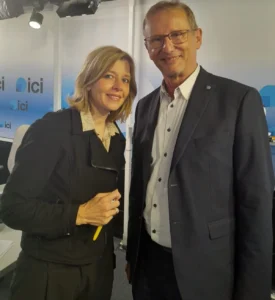
The study identified the primary sources of these airborne plastics as road dust resuspension and precipitation cycles. The researchers observed that these particles undergo aggregation during atmospheric transport, making them highly heterogeneous and difficult to filter. For ASEF, this study confirms that urban residents are effectively "breathing plastic" daily. The association has used these findings to bolster its public awareness campaigns, including recent television appearances by founding member Dr. Jean-Loup Mouysset and collaborators Tania Pacheff and Jean-Baptiste Fini. These experts have warned that nanoplastics can bypass the blood-brain barrier and infiltrate the placenta, posing unprecedented risks to fetal development and long-term neurological health.

The Bitumen Controversy: Health Impacts of Asphalt Plants
Local infrastructure projects have also come under ASEF’s scrutiny, particularly the controversial A69 motorway project. The construction has sparked intense debate over the health impacts of asphalt mixing plants (centrales à bitume). Residents living near these facilities have reported various nuisances and have begun using independent monitoring tools to track air quality. ASEF has responded by publishing a detailed analysis of the pollutants associated with bitumen production, including polycyclic aromatic hydrocarbons (PAHs), volatile organic compounds (VOCs), and heavy metals.
The association points out that while occupational exposure for workers is regulated, the cumulative impact on surrounding communities and local ecosystems remains insufficiently monitored. Bitumen emissions are known to be carcinogenic and can cause respiratory distress and skin irritation. ASEF’s report calls for a re-evaluation of current surveillance frameworks, arguing that the "invisible" nature of these pollutants often leads to a lack of accountability for industrial operators. The association advocates for stricter buffer zones and more transparent real-time emission reporting to protect public health during large-scale infrastructure developments.

Public Outreach and Practical Solutions: "Anti-toxique" and ENVIROpro
Recognizing that systemic change must be accompanied by individual empowerment, ASEF has announced the pre-order launch of its new guide, Anti-toxique, le guide des polluants cachés (Anti-toxic: The Guide to Hidden Pollutants). Authored by a panel of medical experts and led by Dr. Pierre Souvet, the book offers practical strategies for reducing toxic exposure in the home. It covers a wide range of topics, from decoding labels on cleaning products and cosmetics to identifying safer alternatives for food storage and indoor air purification. By providing actionable advice, ASEF aims to bridge the gap between complex scientific data and everyday consumer choices.
Furthermore, ASEF will maintain a high profile at the ENVIROpro Sud-Est trade fair in Martigues on April 1 and 2, 2026. This regional event, which brings together over 200 exhibitors, focuses on environmental and energy solutions. Dr. Souvet is scheduled to deliver a keynote address on the major challenges facing environmental health today. The association’s presence at the fair is intended to facilitate dialogue between health professionals, local government officials, and industrial innovators, emphasizing that the transition to a greener economy is a prerequisite for a healthier society.

Conclusion: A Decisive Moment for Environmental Health
The diverse activities of ASEF in March 2026 reflect a pivotal moment in the movement for environmental health. By intervening in legislative debates, medical education, and scientific discourse, the association is challenging the traditional silos that have separated health policy from environmental protection. The integration of "One Health" principles into French law and medical curricula represents a significant step toward a preventative healthcare model that addresses the root causes of modern disease. As scientific evidence regarding nanoplastics and industrial pollutants continues to mount, ASEF’s role as an intermediary between the laboratory and the public becomes increasingly vital. The association’s efforts suggest that the future of public health will be defined not only by medical breakthroughs in the clinic but by the success of efforts to restore and protect the natural environment.