ASEF Environmental Health Briefing December 2025 Addressing Pesticide Deregulation PFAS Contamination and Prenatal Chemical Risks


The Environmental Health Association of France (ASEF) has issued its comprehensive year-end briefing for December 2025, highlighting a series of critical public health challenges ranging from proposed European legislative shifts in pesticide management to the pervasive presence of "forever chemicals" in French drinking water. As the year draws to a close, the organization, led by President Dr. Pierre Souvet, has intensified its advocacy for stricter chemical regulations and increased public awareness regarding the environmental determinants of chronic illness. The briefing serves as both a retrospective of recent scientific findings and a call to action for European policymakers to prioritize biological safety over industrial simplification.
European Pesticide Regulation: The Omnibus VII Controversy
A central focus of the ASEF briefing is the mounting opposition to the European Commission’s "Omnibus VII" proposal. On December 1, 2025, a coalition of 114 non-governmental organizations, including ASEF and led by Générations Futures, published a collective appeal in Le Monde demanding the immediate withdrawal of the regulation. The signatories argue that the proposal, framed by the Commission as a mere "administrative simplification," represents a fundamental dismantling of the precautionary principle that has governed European pesticide use for decades.
Under current frameworks, chemical substances used in agriculture and biocides are subject to periodic re-evaluations. These reviews allow regulators to integrate new toxicological data and emerging scientific evidence to determine if a product remains safe for the environment and human health. The Omnibus VII proposal seeks to eliminate these mandatory expiration dates for many active substances, potentially allowing for indefinite authorizations. Critics contend that this would effectively freeze the regulatory status of chemicals even as new studies link them to neurodegenerative diseases, endocrine disruption, or biodiversity loss.

The coalition warns that this legislative shift could set European environmental protections back by thirty years. By marginalizing independent scientific expertise and prioritizing the reduction of administrative burdens for chemical manufacturers, the proposal threatens to leave farmers, consumers, and ecosystems exposed to hazardous substances without a clear mechanism for revocation. ASEF emphasizes that the "simplification" of these laws is a misnomer, as it complicates the long-term public health landscape by increasing the burden of chronic disease associated with chemical exposure.
PFAS Contamination: The Invisible Threat in French Tap Water
The briefing also addresses the alarming results of a recent report by the French Agency for Food, Environmental and Occupational Health & Safety (ANSES), which rvealed widespread contamination of the nation’s water supply by per- and polyfluoroalkyl substances (PFAS). On December 3, 2025, Dr. Pierre Souvet appeared on the national television program Le Mag de la Santé to discuss the implications of these findings.
The report highlights the prevalence of Trifluoroacetic acid (TFA), a short-chain PFAS that was previously overlooked in standard monitoring protocols. According to the data, TFA was detected in 92% of the water samples tested across France, indicating that approximately 20% of the French population is currently consuming water that contains these persistent chemicals. TFA is a byproduct of the degradation of various industrial precursors, including certain pesticides and refrigerant gases.
PFAS, often referred to as "forever chemicals" due to their inability to break down in the environment, have been linked to a spectrum of health issues, including liver damage, immune system suppression, metabolic disorders, and various forms of cancer. ASEF points out that while the European Union has begun the process of a universal PFAS restriction under the REACH regulation, the implementation remains slow. The association is calling for an immediate expansion of water monitoring to include all known PFAS variants and for the implementation of advanced filtration technologies in municipal water treatment plants. Furthermore, ASEF stresses the need for "source reduction"—identifying and halting the industrial discharge of these chemicals into the environment rather than merely managing the resulting contamination.

Prenatal Exposure to Phenols and Child Behavior
In a significant contribution to the understanding of early-childhood development, ASEF highlighted a joint study published in The Lancet Planetary Health involving researchers from INSERM, CNRS, and international partners. The study analyzed two major mother-child cohorts: the Barcelona Life Study (1,080 participants) and the SEPAGES cohort in Grenoble (484 participants).
The research focused on the impact of prenatal exposure to 12 different phenols, measured through maternal urine samples during the second and third trimesters of pregnancy. The findings revealed a troubling correlation between high levels of certain chemicals—specifically methylparaben and bisphenol S (BPS)—and behavioral issues in children aged 18 to 24 months.
Key findings from the study include:
- Methylparaben: Exposure was associated with increased scores for "internalizing" behaviors, such as anxiety, depression, and social withdrawal, in both boys and girls.
- Bisphenol S (BPS): High prenatal levels were linked to "externalizing" behaviors, including aggression and hyperactivity, particularly in boys.
- Critical Window: The third trimester was identified as a particularly vulnerable period, coinciding with the rapid development of fetal brain structures responsible for emotional regulation.
ASEF notes that while Bisphenol A (BPA) was banned in food containers in France in 2015, it has largely been replaced by Bisphenol S, which appears to possess similar endocrine-disrupting properties. Methylparaben continues to be widely used as a preservative (E218) in cosmetics and processed foods. The association argues that these findings necessitate a stricter regulatory approach to chemical substitutes and more robust public health messaging for pregnant women to minimize their exposure to plastics, receipts, and certain personal care products.

Mental Health and the Environment: A Holistic Approach
On December 9, 2025, ASEF co-hosted a seminar on mental health in collaboration with the Maison Éguillienne de la Santé. The event brought together healthcare professionals and community members to discuss the "One Health" concept—the intrinsic link between environmental quality and psychological well-being.
The discussions moved beyond the traditional concept of "eco-anxiety" to explore how tangible environmental factors impact mental health. Experts highlighted the role of the gut-brain axis, noting how environmental toxins can disrupt the microbiota, which in turn influences mood and cognitive function. The seminar also addressed "cognitive overload" in modern environments and the restorative power of "green and blue spaces"—access to nature and water.
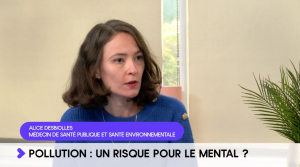
Dr. Alice Desbiolles, a public health physician and ASEF member, recently expanded on these themes in the media, explaining how air pollution and extreme heat waves—driven by climate change—are directly linked to increased hospitalizations for psychiatric disorders. Similarly, Dr. Clarisse Audouin discussed these issues on Euradio, emphasizing that climate change is not just an ecological crisis but a looming mental health emergency that requires systemic societal shifts.
Sustainable Healthcare: Training at the La Fare EHPAD
Recognizing that healthcare facilities themselves can be sources of environmental exposure, ASEF conducted a specialized training session at the La Fare nursing home (EHPAD) in December. The program was designed to help staff identify and mitigate environmental risks within the facility, focusing on indoor air quality, sustainable nutrition, and the reduction of endocrine disruptors in cleaning products.
The training addressed the "neurocognitive barriers" that often prevent institutional change. Staff members were encouraged to view sustainable practices not as an additional burden but as a fundamental component of geriatric care. Participants reported that while the information regarding chemical hazards was initially "anxiety-inducing," the practical solutions provided a sense of agency and hope. ASEF plans to expand this training model to other healthcare institutions in 2026, promoting a "green hospital" philosophy that protects both patients and healthcare workers.
Chronology of Key Events in December 2025
- December 1: Publication of the "Omnibus VII" protest in Le Monde by 114 organizations.
- December 3: National broadcast of Dr. Pierre Souvet’s analysis of the ANSES PFAS report.
- December 9: ASEF mental health seminar in collaboration with the Maison Éguillienne de la Santé.
- Mid-December: Release of the Lancet Planetary Health study on prenatal phenol exposure.
- Late December: Completion of the sustainable health training program at the La Fare EHPAD and release of the year-end briefing.
Broader Impact and Policy Implications
The cumulative evidence presented in the December briefing underscores a critical juncture for environmental health policy in Europe. ASEF’s analysis suggests that the current regulatory trend toward "simplification" may be at odds with the escalating scientific evidence of chemical harm. The association argues that the economic costs of environmental illness—including healthcare expenditures for chronic diseases and lost productivity due to behavioral and cognitive disorders—far outweigh the administrative costs of rigorous chemical oversight.
As 2026 approaches, ASEF intends to lobby for a "Non-Toxic Environment" strategy that prioritizes the phase-out of the most harmful substances, including the entire class of PFAS and persistent endocrine disruptors. By bridging the gap between clinical medicine and environmental science, ASEF continues to play a pivotal role in informing the public and challenging policymakers to safeguard the biological integrity of future generations. The organization’s message is clear: protecting human health in the 21st century is inseparable from protecting the environment in which we live.