France Delays Implementation of "Polluter-Pays" Tax on PFAS, Drawing Criticism Over Environmental Protection and Industrial Interests

The French government has opted to postpone the enforcement of a crucial "polluter-pays" fee targeting water pollution by per- and polyfluoroalkyl substances (PFAS), shifting its effective date from March 1, 2026, to September 1, 2026. This decision, announced as an amendment to the state budget and proposed by Haute-Savoie deputy Anne-Cécile Violland (Horizons), marks a significant concession following initial governmental intentions to delay the measure even further, potentially until 2027. The move has ignited a contentious debate between environmental advocates, who decry it as a setback for public health and ecological remediation, and industrial representatives, who welcome the additional time for compliance and legal certainty.
Understanding the "Eternal Pollutants": PFAS and Their Impact
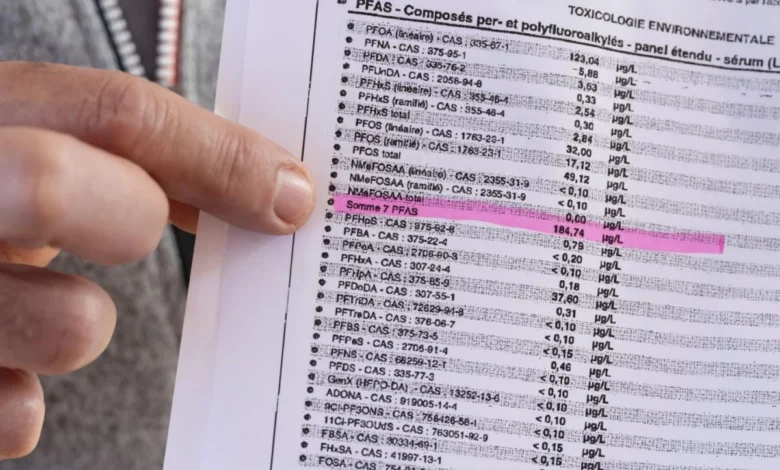
PFAS, often dubbed "eternal pollutants" due to their exceptional persistence in the environment, represent a class of thousands of synthetic chemicals used extensively across various industries since the 1940s. Their unique properties, including water and grease repellency, heat resistance, and non-stick characteristics, have led to their incorporation into a vast array of consumer products and industrial applications. These include non-stick cookware (Teflon), waterproof clothing, food packaging, fire-fighting foams, cosmetics, electronics, and automotive parts.
The widespread use of PFAS has, however, led to their ubiquitous presence in the environment. They contaminate soil, air, and, critically, water sources – both surface water and groundwater – making their way into drinking water supplies. Once released, PFAS do not degrade naturally, accumulating in ecosystems and bioaccumulating in living organisms, including humans. Scientific studies have linked exposure to certain PFAS to a range of serious health concerns. These include increased risk of kidney and testicular cancer, thyroid disease, elevated cholesterol levels, reduced fertility, developmental effects in children, and impacts on the immune system. The health burden and economic costs associated with PFAS contamination, including healthcare expenses and remediation efforts, are substantial and growing. For instance, a 2023 study published in Environmental Science & Technology Letters estimated the health-related costs of PFAS exposure in Europe alone to be in the billions of euros annually.
Legislative Journey of France’s PFAS Law
The legislative push to address PFAS pollution in France gained significant momentum with the initiative of ecologist deputy Nicolas Thierry. His proposed law aimed to establish a comprehensive framework for regulating and taxing these pervasive chemicals. The bill, which ultimately sought to ban the manufacture, import, and sale of products containing PFAS in certain categories (such as textiles, cosmetics, and ski waxes) and introduce a polluter-pays principle, faced considerable debate in the French Parliament.
After navigating various parliamentary stages, including amendments and discussions between the National Assembly and the Senate, the law against PFAS was successfully promulgated in February 2025. This landmark legislation positioned France as one of the leading nations in Europe to adopt a stringent regulatory approach to PFAS. A core component of this law was the introduction of an environmental fee or "redevance" specifically designed to internalize the external costs of PFAS pollution. This fee, to be levied on industrial facilities discharging PFAS into water systems, was intended to generate revenue for depollution efforts and incentivize industries to reduce their emissions at the source. The initial timeline set by the promulgated law stipulated the fee’s entry into force in March 2026.
The Amendment and Governmental Maneuvers
During the budget discussions, a critical amendment was introduced by deputy Anne-Cécile Violland. This amendment proposed to push back the implementation of the PFAS fee. While the government initially expressed a preference for an even longer delay, potentially until 2027, the adopted amendment settled on a revised start date of September 1, 2026.
This adjustment in the timeline, though seemingly minor, has significant financial ramifications. According to an investigation by Radio France’s investigative unit, the initial delay of the fee by Matignon (the Prime Minister’s office) to "back-to-school" 2026 (September 2026) would reduce the anticipated tax revenues from the chemical industry by at least 15 million euros, funds earmarked specifically for water depollution efforts. This figure underscores the direct financial impact of deferring the "polluter-pays" principle.
Official Justification: Technical Delays and Legal Certainty
The Ministry of Economy and Finance (Bercy) provided an official explanation for the delay, characterizing it as a "technical report" necessary to ensure the "legal certainty" of the redevance. In a statement to AFP, Bercy elaborated on the complexities necessitating this postponement:
"The six-month technical delay in the entry into force of the PFAS fee aims to guarantee its legal security. This delay accounts for the recent expansion of the list of monitored substances, which implies new measurement campaigns for certain installations, including sites not previously concerned. It also addresses the necessity to harmonize measurement methods and disseminate self-monitoring standards."
This justification points to several critical challenges:
- Expanded Substance List: The evolving scientific understanding of PFAS has led to the identification of more compounds within the family that require monitoring. This expansion means industries need to test for a wider range of substances, which requires time.
- New Measurement Campaigns: Facilities, some of which may not have been previously identified as significant PFAS emitters, now need to conduct comprehensive measurement campaigns to assess their discharge levels accurately.
- Harmonization of Methods: Ensuring consistent and reliable data across different industrial sites and regions requires standardized measurement protocols and analytical techniques. Developing and implementing these harmonized methods is a complex task.
- Dissemination of Self-Monitoring Standards: Industries need clear guidelines and standards for self-monitoring their PFAS discharges. The development and effective communication of these standards are crucial for compliance and enforcement.
- Legal Certainty and Visibility: The government emphasizes the need to provide industrialists with sufficient "visibility" and "legal certainty" to adapt their processes, invest in new technologies, and comply with the regulations without undue burden or risk of legal challenge.
While these technical arguments hold some validity, critics argue that the delay goes beyond mere technicalities, reflecting a deeper reluctance to impose immediate financial obligations on industrial polluters.
Internal Discrepancies and Matignon’s Intervention
Further insights into the government’s decision-making process were revealed by Radio France’s investigation unit. According to their findings, the draft decree detailing the implementation of the PFAS fee was finalized by the Ministry of Ecological Transition as early as "early January," indicating that the environmental ministry was prepared for the original March 2026 timeline.
However, Bercy reportedly sought a further delay of "several months," pushing for more time to offer industries the aforementioned "visibility" and "legal certainty." This internal disagreement between the Ministry of Ecological Transition, advocating for prompt environmental action, and the Ministry of Economy and Finance, prioritizing industrial concerns, was ultimately resolved by Matignon. The Prime Minister’s office, tasked with arbitrating such inter-ministerial disputes, reportedly sided with the more extended deadline proposed by Bercy, settling on September 1, 2026. This decision highlights a perceived prioritization of economic considerations over immediate environmental enforcement within the highest echelons of government.
Strong Reactions and Criticisms from Environmental Advocates
The decision to delay the PFAS fee has been met with fierce condemnation from environmental groups and the original architect of the law, ecologist deputy Nicolas Thierry. Expressing his profound disappointment to AFP, Thierry stated, "One can only be outraged. The government is very clearly choosing to protect the interests of industrialists to the detriment of the interests of French women and men."
Thierry’s criticism extends beyond the immediate delay, touching upon fundamental principles of environmental justice and social equity. He underscored a "real issue of social justice behind this," pointing out that the most contaminated sites are "often" located in areas inhabited by "households affected by precariousness." He argued that these vulnerable communities, already disproportionately exposed to pollution, would now be asked "to pay even more on their water bill" to finance the necessary depollution efforts. This argument resonates with broader discussions on environmental racism and the unequal distribution of environmental burdens, where marginalized communities frequently bear the brunt of industrial pollution. The delay, therefore, is not merely a technical adjustment but, for Thierry, a political choice that compounds existing inequalities.
The "Polluter-Pays" Principle and Financial Implications
The ecologist-initiated law enshrines the "polluter-pays" principle, a cornerstone of environmental policy. This principle mandates that those who cause environmental damage should bear the costs of remedying it. Specifically, the law stipulates a fee of 100 euros for every 100 grams of PFAS discharged into water by industrial facilities, effective from 2026. This financial incentive is designed to encourage industries to invest in pollution reduction technologies, substitute PFAS with safer alternatives, and improve their waste management practices.
Bercy reiterated that the mechanism "retains its objective of incentivizing the reduction of discharges at the source, within the framework of the polluter-pays principle." The ministry also asserted that "initial results already show significant investments by industrialists in treatment and substitution processes, resulting in a reduction in discharges and estimated yield." However, the financial impact of the delay casts a shadow over these assurances.
Radio France’s investigation, citing a document from the Ministry of Ecological Transition, projected an annual revenue of "21 million euros" for the state if the measure had come into effect in October 2025. With the postponement to September 2026, the government now anticipates a significantly reduced revenue, potentially as low as "5 million euros, perhaps less." This drastic reduction in anticipated funds creates a substantial deficit for local authorities, who are on the front lines of water management and bear a significant responsibility for financing depollution and ensuring safe drinking water. The financial burden shifted from industrial polluters to public funds and potentially consumer water bills undermines the very essence of the "polluter-pays" principle, delaying crucial investments in environmental remediation.
Broader Context and Future Outlook
The controversy surrounding France’s PFAS tax delay mirrors a global struggle to effectively regulate and manage these pervasive chemicals. The European Union, for instance, is actively working on a comprehensive ban on PFAS, which could be the broadest chemical restriction ever implemented in the bloc. Countries like the United States are also grappling with extensive PFAS contamination, with the Environmental Protection Agency (EPA) setting stringent drinking water standards and allocating significant funding for remediation.
France’s decision, therefore, is being watched closely as an indicator of political will in tackling industrial pollution. While the government stresses the importance of technical feasibility and legal certainty for industries, environmental groups emphasize the urgency of public health protection and the need for polluters to bear their responsibility without undue delay. The delay, even if framed as technical, inevitably sends a signal about the balance struck between economic competitiveness and environmental imperatives.
The long-term implications of this decision could be manifold. Firstly, the reduced revenue stream will undoubtedly slow down the pace of water depollution efforts, potentially prolonging exposure risks for affected populations. Secondly, it could be perceived as a weakening of the "polluter-pays" principle, potentially disincentivizing proactive investments by industries if compliance deadlines are seen as flexible. Thirdly, it places additional financial strain on local communities already struggling with the costs of managing water infrastructure and addressing existing contamination.
The ongoing challenge of PFAS pollution demands a robust and unwavering commitment from governments. While providing a reasonable transition period for industries is often necessary for effective implementation, the extent and justification of delays remain a critical point of contention. The debate in France highlights the complex interplay between environmental policy, economic interests, and social justice, underscoring the continuous need for vigilance and advocacy to ensure that the health of citizens and the environment are prioritized. As the new September 2026 deadline approaches, all eyes will be on the government’s resolve to finally implement this vital measure and on the impact it will have on France’s battle against eternal pollutants.